14k Gold vs 24k Gold An Investor’s Guide
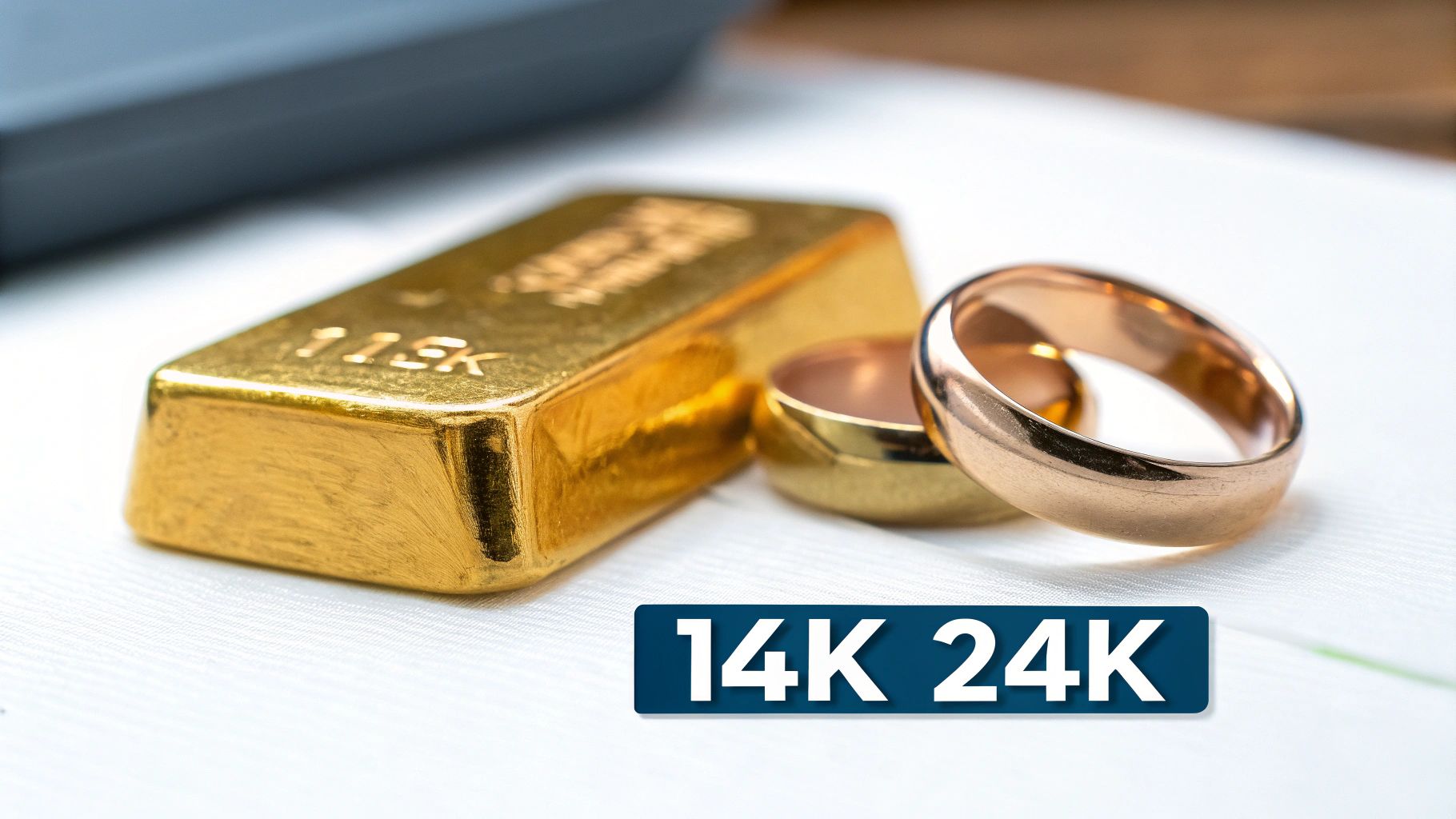
When you boil it down, the main difference between 14k and 24k gold is all about purity. Think of it like this: 24k gold is 99.9% pure gold, the real deal. On the other hand, 14k gold is an alloy, which is just a fancy word for a metal mix. It contains 58.3% gold, with the rest being stronger metals. This single distinction impacts everything from its color and durability right down to its actual financial value.
Understanding the Core Differences
Whenever you see the term “karat,” just think of it as a simple purity scale that goes up to 24. For 24k gold, all 24 parts are pure gold, making it the most authentic and valuable form you can get by weight.
But that purity comes with a major trade off in practicality. Pure gold is incredibly soft and easy to bend. That’s why it’s usually mixed with other metals, like copper, silver, and zinc, to create a tougher material that can handle the bumps and scrapes of daily life. So, 14k gold is simply 14 parts gold and 10 parts of those other metals.
To really get a handle on what you own, learning how to accurately test gold purity is a game changer. Figuring out the true karat of your items is the first real step in knowing what they’re worth, a process we detail in our guide on how to test gold purity.
14k vs 24k Gold At a Glance
The mix of metals is what gives 14k gold its signature durability. This recipe is so effective that 14k gold completely dominates the jewelry market in the United States, making up around 90% of all gold jewelry sales. It’s the go to for a reason.
To make it simple, here’s a quick rundown of their key characteristics in a table.
| Attribute | 14k Gold | 24k Gold |
|---|---|---|
| Purity | 58.3% pure gold | 99.9% pure gold |
| Durability | High, resistant to scratches | Very soft, easily bends |
| Color | Lighter, paler yellow | Bright, vibrant yellow |
| Common Uses | Everyday jewelry, rings | Investment coins, bars |
| Melt Value | Lower due to less gold | Highest possible value |
Ultimately, this trade off between purity and strength is the most important thing to remember when comparing 14k vs 24k gold. It dictates not just the price, but what the gold is actually good for.
How Gold Purity Dictates Financial Value
When it comes to the financial worth of a gold item, one factor stands above all others: purity. The karat system is the language we use to describe this purity, telling us how many parts out of 24 are pure gold. This simple ratio is the bedrock of gold valuation and the main reason for the huge price gap between 14k and 24k gold.

With 24k gold, you’re looking at the purest form available. All 24 parts are pure gold, giving it a purity of 99.9%. On the other hand, 14k gold contains just 14 parts gold mixed with 10 parts of other metals. That brings its gold purity down to 58.3%.
Understanding Melt Value
So what about those other 10 parts in a 14k piece? They are alloys like copper, silver, and zinc. While they’re crucial for making jewelry strong enough to wear, they add next to nothing to the price when you’re focused on raw value. The item’s true worth, what we call its melt value, comes only from the pure gold it contains.
This is where the financial difference really hits home. A piece of 24k gold has nearly 42% more pure gold by weight than a 14k piece of the same size. Think of it as concentrated orange juice versus the diluted kind. The more pure stuff you have, the more it’s worth, gram for gram.
For sellers and investors, this is the most important thing to remember: the brand, the intricate design, or the fancy craftsmanship almost never matters in a melt value appraisal. The price comes down to a simple equation: weight multiplied by purity.
Purity Comparison and Financial Impact
That direct link between gold content and value is reflected instantly in market prices. Let’s say the spot price of gold is $75 per gram. The value of the actual gold inside each karat type would be worlds apart. This table breaks down how purity translates to raw financial worth, before any refining fees are considered.
| Karat Purity | Gold Content (%) | Example Value of 1 Gram of Pure Gold |
|---|---|---|
| 24k Gold | 99.9% | $74.93 |
| 14k Gold | 58.3% | $43.73 |
As you can see, a gram of 24k gold is packed with far more intrinsic value than a gram of 14k gold. This is exactly why investment grade bullion is always 24k; investors want the most gold for their money without paying for less valuable alloy metals. For anyone looking to sell scrap gold or just figure out what their assets are worth, getting this relationship between purity and price is the first step to a fair deal.
Durability and Real World Use: Where the Real Difference Shows
While purity drives the raw financial value, the real difference between 14k and 24k gold pops up when you look at how they hold up in everyday life. Pure 24k gold is undeniably beautiful with its deep, rich color, but it’s also incredibly soft. This malleability means it’s a magnet for scratches, dings, and can bend with surprisingly little force.
Because of this inherent softness, you’ll almost never find 24k gold used for jewelry meant to be worn daily. Just picture a 24k gold engagement ring. It would lose its shape and get banged up in no time. The other metals mixed into 14k gold, like copper and zinc, are there for a reason: they add the strength and hardness needed to withstand a lifetime of regular use. This resilience is precisely why 14k is the go to standard for engagement rings, bracelets, and necklaces that need to last.
Think of it this way: 24k gold is like a high performance race car, built for one specific purpose and handled with extreme care. 14k gold is your reliable daily driver, engineered to handle the bumps and scrapes of the real world without losing its charm.
Practical Applications and Visual Differences
That difference in metal composition also creates a noticeable visual distinction. Pure 24k gold has a deep, almost orange yellow hue that’s incredibly rich and vibrant. In contrast, the alloys in 14k gold create a lighter, more subtle yellow tone. Many people in Western markets actually prefer this softer color for its understated elegance.
Let’s ground this in some real world scenarios. A 14k wedding band is a practical, durable choice designed to keep its form and finish through years of constant wear. On the flip side, a 24k gold coin is best kept in secure storage as an investment, where its softness isn’t a problem and its purity is what matters most.
Here’s a simple table to break down the best uses for each.
| Scenario or Use Case | Best Fit Gold Type | Why It’s the Right Choice |
|---|---|---|
| Everyday Jewelry (Ring, Bracelet) | 14k Gold | Offers superior strength and scratch resistance for items worn daily. |
| Pure Investment (Coins, Bars) | 24k Gold | Provides the highest intrinsic value with maximum gold content. |
| Ceremonial or Heirloom Pieces | 24k Gold | Purity is often a symbol of wealth and cultural importance. |
| Intricate Jewelry Designs | 14k Gold | Harder alloys hold complex shapes and secure gemstones effectively. |
Even though 24k gold is too soft for most jewelry here, its rich color and purity are highly prized in many cultures, especially in Asia Pacific markets. In fact, that region accounts for a massive 48% of global gold jewelry demand, often for weddings and special gifts. If you’re interested in this trend, you can discover more insights about 24k gold’s market on accio.com.
Ultimately, choosing between 14k and 24k isn’t about which one is “better.” It’s about picking the right tool for the job.
How to Calculate the Value of Your Gold
If you want to know what your gold is really worth, you need to understand its “melt value.” This is the raw, intrinsic value of the pure gold in your item, completely separate from any artistic design, brand name, or sentimental attachment. Learning to calculate it yourself is surprisingly simple and puts you in a much stronger position before you even think about selling.
The whole process boils down to a few key steps. First, you’ll weigh your item in grams. Then, you’ll look up the current market price for gold, known as the spot price, which is usually listed per troy ounce. Finally, you’ll do a quick calculation based on your item’s purity to find out how much that pure gold content is worth.
Step by Step Calculation
Let’s make this real. Say you have two pieces of gold, and both weigh exactly 10 grams: one is a 14k gold chain, and the other is a 24k gold bar. For this example, we’ll use a live spot price of $2,300 per troy ounce.
Get the Price Per Gram: The spot price is almost always quoted per troy ounce, but jewelry is weighed in grams. Since there are 31.103 grams in one troy ounce, the first step is to convert the price.
- $2,300 ÷ 31.103 = $73.95 per gram (this is the price for pure, 24k gold).
Adjust for Purity: This is where the karat stamp makes all the difference. You have to multiply the pure gold price by the actual gold content of your item.
- 14k Gold: It’s 58.3% pure gold. So, the math is: $73.95 x 0.583 = $43.12 per gram.
- 24k Gold: This is 99.9% pure gold, so its value is nearly identical to the spot price: $73.95 x 0.999 = $73.88 per gram.
Find the Total Melt Value: Now, just multiply that per gram value by the weight of your items.
- 10 gram 14k Chain: 10g x $43.12/g = $431.20
- 10 gram 24k Bar: 10g x $73.88/g = $738.80
The difference is stark. The 10 gram 24k bar is worth over $300 more in pure metal value than the 14k chain of the exact same weight. For a closer look at these numbers, you can explore this breakdown of how much 14 karat gold is worth per gram to see how market fluctuations play a role.
This infographic breaks down the essential trade off: the toughness of 14k gold versus the pure value of 24k gold.
As you can see, 14k gold’s real advantage is its durability, making it practical for jewelry, while 24k gold’s claim to fame is its unmatched purity.
Why Your Payout Is Less Than Melt Value
Here’s a crucial piece of information: the melt value you calculate is the full market value, but it isn’t what a buyer will hand you. Gold buyers, refiners, and pawn shops are all businesses. They have overhead like rent, payroll, equipment, and the cost of refining the gold. They also need to turn a profit to stay open.
The final offer you receive will be a percentage of the melt value, typically ranging from 70% to 95%. This margin covers the buyer’s operational expenses, refining fees, and profit.
How much of that percentage you get often depends on who you’re selling to and how much gold you have. By calculating the melt value on your own first, you establish a solid baseline. It turns you into an informed seller who can negotiate confidently and spot a fair deal.
Investment Potential and Market Demand
When we get into the investment side of things, the conversation around 14k and 24k gold splits into two completely different worlds. They’re driven by entirely separate market forces.
The value of 24k gold is welded directly to the global commodities market. Its price ebbs and flows with the daily spot price of gold, reacting to everything from inflation reports to geopolitical shake ups. This is why 24k gold is the undisputed standard for investment grade bullion. It’s the go to for central banks, serious investors, and anyone looking for a rock solid safe haven asset.
On the flip side, the demand for 14k gold is almost entirely propped up by the jewelry industry. Its value is less about the minute by minute spot price and more about what’s happening in fashion, consumer spending, and cultural trends. While it absolutely holds value from its gold content, its main job is to be beautiful and functional, not just a line item in a portfolio.
For pure investment, 24k gold is the hands down winner. Its value is liquid, globally recognized, and based purely on its weight and purity. The market for 14k gold is tied to consumer whims, making it a much less direct way to invest in gold itself.
Global Tastes and Consumer Behavior
You can see these different market dynamics play out in consumer habits across the globe. In Western markets like the United States, 14k gold reigns supreme because it hits that perfect sweet spot of durability and affordability. People want gold they can wear every day without worrying about it.
But travel to many parts of Asia, particularly India and China, and the story changes dramatically. Higher karat gold, like 22k and 24k, is woven into the very fabric of cultural traditions. In these regions, gold is often seen as “wearable wealth,” a beautiful accessory that doubles as a personal savings account.
The global gold jewelry market was valued at around USD 126 billion in 2025 and is set to grow significantly. This growth is fueled by these wildly different cultural demands, from the 11 to 13 million weddings registered each year in India where high karat gold is a ceremonial staple, to the steady demand for tough as nails 14k pieces in the West.
This table breaks down the main drivers for each type of gold.
| Gold Type | Primary Market Driver | Key Influences | Ideal Buyer |
|---|---|---|---|
| 24k Gold | Investment & Finance | Spot price, inflation, economic stability | Investors, central banks, collectors |
| 14k Gold | Jewelry & Consumer Goods | Fashion trends, cultural events, affordability | Jewelry consumers, gift buyers |
If you’re leaning more towards the financial side, this comprehensive guide to investing in gold coins is a great resource for navigating that specific market. But no matter your interest, understanding these distinct demands is key to appreciating why each type of gold has its own unique place in the world.
And if you want to dive deeper into the investment case for purer forms of gold, check out our detailed guide on the nuances of investing in high karat gold.
Making the Right Choice for Your Goals
So, when it comes to the 14k vs. 24k gold debate, the real question isn’t about which one is better overall. It’s about which one is better for you. Your decision should hinge entirely on what you’re trying to accomplish, whether you’re buying a gift, securing an investment, or celebrating a major cultural moment. Each type of gold has its own job, and matching your purchase to that job is the key to a smart buy.
If your main goal is pure financial investment and preserving wealth, the answer is simple: 24k gold is the undisputed champ. Typically sold as coins or bars, its value is directly pegged to the global spot price of gold, making it a liquid and universally recognized asset. Because it contains the maximum amount of pure gold, its worth is tied to the commodity itself, not fleeting fashion trends or how well it holds up to daily life.
Aligning Gold with Your Intentions
On the other hand, if you’re looking for jewelry that can actually handle the bumps and scrapes of everyday life, 14k gold is the far more practical option. It hits that sweet spot between beauty, durability, and affordability. An engagement ring, a necklace you never take off, or a sturdy bracelet made from 14k gold will resist scratches and keep its shape much better than its softer, purer cousin.
Then there are those significant cultural or ceremonial events where purity is everything. In many traditions, gifting 24k gold jewelry for a wedding or festival is a powerful symbol of prosperity and good fortune. In these cases, its softness is a minor detail compared to its immense symbolic value.
To make it even clearer, this table breaks down the best choice for a few common scenarios.
| Your Primary Goal | The Best Gold Choice | Why It Makes Sense |
|---|---|---|
| Pure Investment | 24k Gold (Coins/Bars) | It offers the maximum intrinsic value directly tied to market prices. |
| Daily Wear Jewelry | 14k Gold | This alloy provides the best mix of durability, appearance, and cost. |
| Cultural/Ceremonial Gift | 24k Gold | Its purity holds deep symbolic and traditional meaning. |
| Selling for Melt Value | Both, but 24k yields more | 24k gold will always fetch a much higher price per gram due to its purity. |
Ultimately, let function be your guide. Are you buying an asset to lock away in a safe, or an accessory to wear on your wrist? Answering that simple question will almost always point you in the right direction.
Common Questions About Gold Purity
When you’re digging into the world of gold, a lot of practical questions pop up. We’ve covered the big differences in value and durability, but let’s tackle some of the most common things people wonder about when comparing 14k and 24k gold.
Does 14k Gold Tarnish or Change Color Over Time?
Pure 24k gold is famous for one thing: it doesn’t tarnish or rust. Ever. But 14k gold is a different story because it’s an alloy, a mix of gold and other metals.
Those other metals, usually copper and silver, can react with things like oxygen, moisture, and even chemicals from lotions or perfumes. Over time, this can cause a slight darkening on the surface of your jewelry. The good news? It’s typically minor and easy to fix. A quick trip to the jeweler for a professional cleaning will restore its original shine and make it look brand new.
Which Is Better for Retaining Value: 14k or 24k Gold?
When it comes to holding its value, 24k gold is the undisputed champion. Its worth is tied almost entirely to its pure gold content, which mirrors the global spot price of gold. Think of it as a liquid asset, recognized and valued for its purity anywhere in the world.
While 14k gold jewelry definitely holds value, it is 58.3% gold after all, its resale price isn’t as straightforward. The final price tag depends on things like the brand, the piece’s design, current fashion trends, and its overall condition. If you sell it for its melt value, it will always be worth significantly less than the same weight of 24k gold.
Here’s the bottom line: buying 24k gold is an investment in the commodity itself. Buying 14k gold is an investment in a piece of wearable art, where the gold content provides a solid floor for its value, but not the whole picture.
Can People with Sensitive Skin Wear 14k Gold?
This is a huge concern for many, and the answer really comes down to what other metals are in the 14k mix. The most common troublemaker for skin irritation is nickel, an alloy often added to increase strength, especially in white gold.
If you have sensitive skin or a known nickel allergy, some 14k gold pieces can definitely cause a reaction. The good news is that many jewelers now offer nickel free 14k gold. For anyone with serious sensitivities, moving up to higher purity options like 18k, 22k, or even 24k is the safest bet, as the lower alloy content dramatically reduces the risk of irritation.
Why Is 24k Gold So Popular in Certain Countries?
The deep cultural love for 24k gold, especially in places like India, China, and across the Middle East, is woven into both tradition and economics. In these regions, gold isn’t just an accessory; it’s a powerful symbol of wealth, status, and financial security.
The deep, rich color of pure gold is prized for its beauty and plays a central role in major life events like weddings and festivals. Gifting 24k gold is a traditional way to offer blessings and prosperity. It also functions as a form of “wearable wealth,” a personal, portable asset that holds its value, can be passed down through generations, or sold in a time of need.
Ready to discover the real value of your gold? The Gold Calculator provides instant, accurate melt value estimates based on live market prices. Our free tool empowers you to make informed decisions, whether you’re selling, buying, or simply curious.
Disclaimer: This website provides educational and informational content only. It is not financial or investment advice. Consult qualified experts before making any decisions.