Your Guide to Using a Price of Gold Scrap Calculator
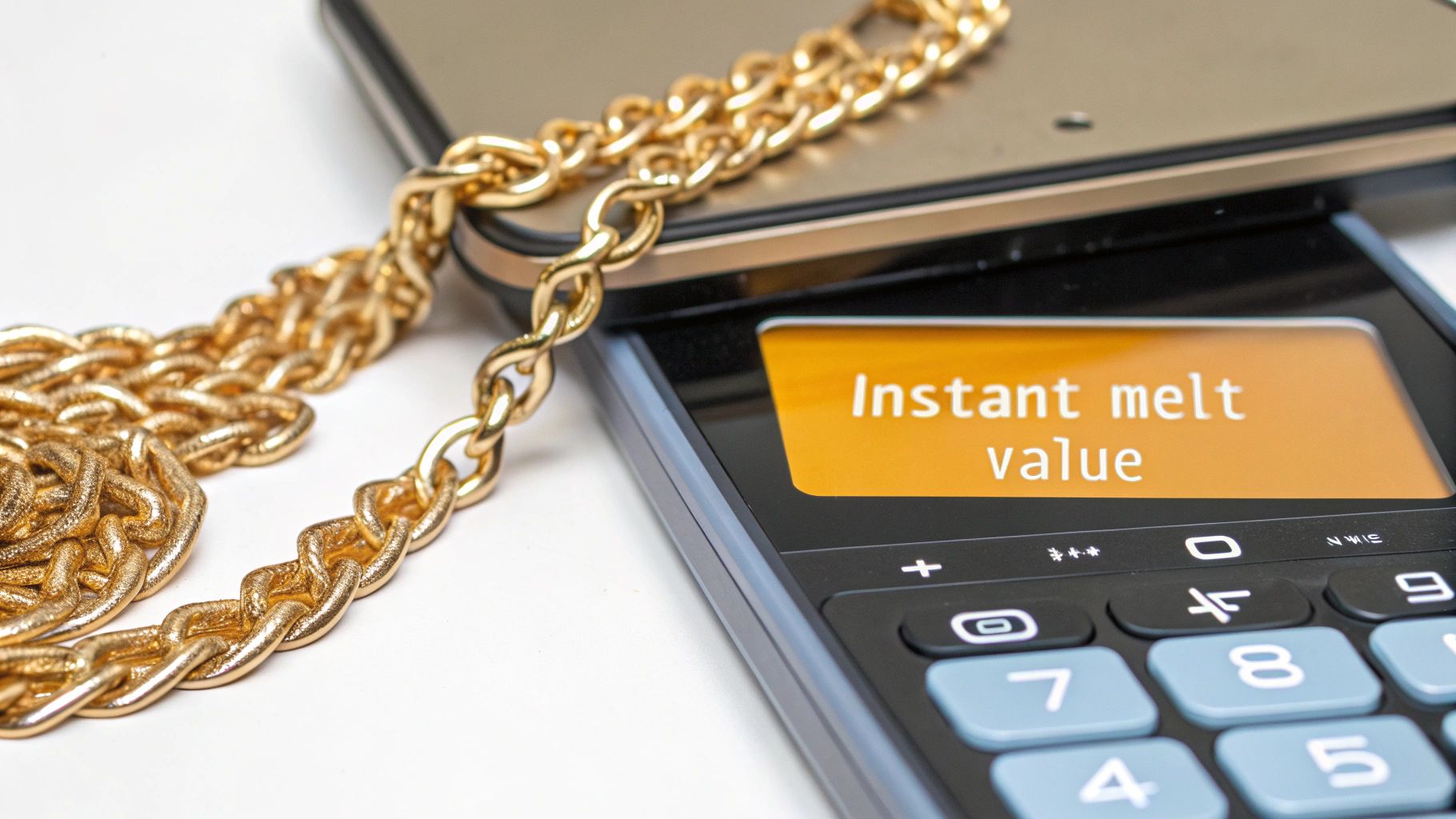
A price of gold scrap calculator is a handy tool that gives you an instant estimate of your item’s melt value. It works its magic using just three key pieces of information: the gold’s purity (karat), its weight, and the live market price of gold. The result is a clear financial snapshot of what your scrap gold is worth.
Instantly Find Your Gold Scrap Value
Ever found an old piece of jewelry tucked away in a drawer and wondered what it might actually be worth? Most people have a few items like this, a broken chain, a single earring, or an outdated ring, and have no idea if they are holding a few dollars or a few hundred.
This is exactly where a price of gold scrap calculator comes in. It cuts right through the guesswork, giving you a real time valuation based on the pure gold content locked inside your item.
The process is refreshingly simple. A reliable calculator pulls live data from global markets to make sure the price it is using is up to the minute accurate. You just plug in the details you know, and it handles all the complex math for you.
What Determines Your Gold’s Worth
The value you see is not just an arbitrary number; it is calculated using a straightforward formula. Three main factors work together to determine the final figure:
- Gold Purity: This is measured in karats (like 10K, 14K, or 18K) and tells you how much pure gold is in your item versus other metals.
- Weight: It is simple, the heavier the piece, the more gold it contains. An accurate weight is crucial for an accurate valuation.
- Live Gold Price: Often called the “spot price,” this is the market price of gold, which fluctuates all day long based on global trading.
The best calculators are designed for ease of use, allowing anyone to get a quick and transparent estimate.
To really see how these factors interact, let’s walk through a common example. The table below shows just how much the melt value of a standard 10 gram, 14K gold chain can change as the market price of gold shifts.
Sample Melt Value of a 10 Gram 14K Gold Item
| Gold Spot Price (Per Troy Ounce) | Pure Gold Value (Per Gram) | Estimated Melt Value of Your Item |
|---|---|---|
| $2,300 | $73.95 | $431.13 |
| $2,350 | $75.55 | $440.45 |
| $2,400 | $77.16 | $449.84 |
| $2,450 | $78.77 | $459.23 |
As you can see, even a relatively small jump in the spot price has a noticeable impact on what your scrap gold is worth. This is why using a tool that taps into live data is so important for knowing your item’s true, current value.
It is also interesting to think about other, less obvious sources of precious metals. For instance, a surprising amount of value is unlocked from recycled computer parts, as electronics often contain small but recoverable amounts of gold.
How the Gold Scrap Calculator Actually Works
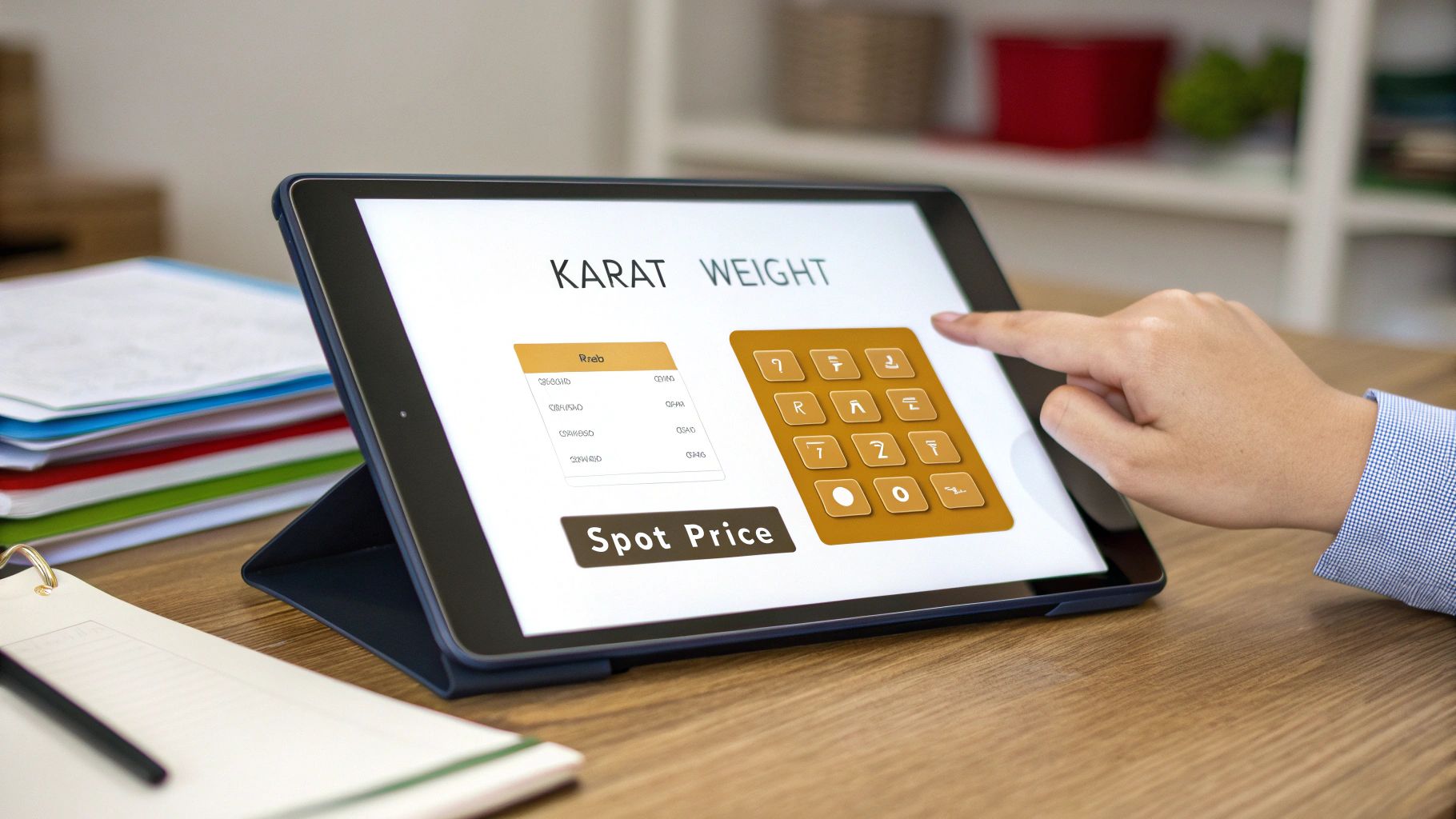
Ever wondered what’s going on behind the scenes when you use a gold scrap calculator? It is not magic, but it is a pretty smart process. Think of it like a chef following a recipe. You provide the key ingredients, your gold’s specific details, and the calculator follows a precise formula to serve up the final dish: your gold’s estimated melt value.
This is not just a random guess; it’s a logical calculation that turns a physical item into a reliable dollar amount. Let’s break down each of those core ingredients one by one to see how they come together. Once you understand the process, you can use the tool with total confidence.
The First Ingredient: Gold Purity
The most important factor in the entire equation is gold purity. This tells the calculator how much pure gold is actually in your item versus other metals, known as alloys. Pure gold (24 karat) is incredibly soft, so metals like copper, silver, or zinc are mixed in to make it strong enough for jewelry.
You will see purity expressed in a couple of ways:
- Karats (K): This is the traditional measurement system based on 24 parts. For example, 14K gold means your item is made of 14 parts pure gold and 10 parts other metals.
- Fineness: This is a more precise, three digit number that shows purity in parts per thousand. 18K gold has a fineness of 750, meaning it is exactly 75% pure gold.
The calculator uses this number to figure out the exact percentage of pure gold it needs to value.
The Second Ingredient: Item Weight
Once the purity is locked in, the calculator needs to know how much of that metal you actually have. This is where weight comes into play. The weight of your scrap gold is a direct multiplier in the value formula, the more it weighs, the more it’s worth. Simple as that.
Accuracy is key here. While a kitchen scale can give you a rough idea, a proper jeweler’s scale is best for getting precise results. Good calculators are built to accept weight in various units, so you do not have to do the conversions yourself. A price of gold scrap calculator can handle inputs in grams, pennyweights (dwt), and troy ounces. Just be careful: a standard ounce (used for food) is different from a troy ounce (used for precious metals). Always use the correct unit for an accurate valuation.
The Third Ingredient: Live Gold Spot Price
The final piece of the puzzle is the one that’s always moving: the live gold spot price. This is the current market price for one troy ounce of pure, 24K gold, traded on major global exchanges like COMEX in New York. This price can fluctuate every few minutes based on economic news, currency strength, and global demand.
A trustworthy online scrap calculator will connect directly to these markets, pulling in data in real time. This ensures your valuation is based on what gold is worth right now, not what it was worth yesterday or last week.
The table below shows just how much purity affects the value of a 10 gram gold item when the spot price is $2,350 per troy ounce.
| Karat Purity | Fineness (Purity %) | Pure Gold Content (Grams) | Estimated Melt Value |
|---|---|---|---|
| 10K | 41.7% | 4.17 g | $315.00 |
| 14K | 58.3% | 5.83 g | $440.45 |
| 18K | 75.0% | 7.50 g | $566.72 |
| 24K | 99.9% | 9.99 g | $755.13 |
By combining these three elements, purity, weight, and the live spot price, the calculator performs a simple but powerful calculation. It figures out the exact amount of pure gold in your item and multiplies it by the current market rate. If you would like to see more examples, you can check out our guide on how to use a today gold price calculator for more detail. The result is a clear, data driven estimate of your gold's raw melt value.
A Step-by-Step Guide to Valuing Your Gold
Figuring out the theory behind a gold scrap calculator is a great start, but the real magic happens when you put it into practice. Let's move from just talking about it to actually doing it. This guide will walk you through the exact, practical steps to get a reliable value for your gold items.
Think of this as your personal checklist for turning that old jewelry box into a clear dollar amount. Just follow these three simple steps, and you’ll have all the essential info any gold calculator needs.
Step 1: Identify Your Gold's Purity
Before you can calculate a single thing, you need to know exactly what you are working with. Your gold's purity is, without a doubt, the most important factor driving its value. Thankfully, most gold jewelry has its purity stamped right on it.
This little stamp is called a hallmark. You might need a magnifying glass for this part, as these marks can be incredibly tiny.
Here’s what you should be looking for:
- Karat Marks: You’ll likely see stamps like 10K, 14K, or 18K. This is the standard system in North America, telling you how many parts of pure gold are in the item out of a total of 24.
- Fineness Marks: In Europe and other parts of the world, it is more common to find a three digit number. For example, 585 means the item is 58.5% pure gold (the same as 14K), while 750 means it’s 75% pure gold (the equivalent of 18K).
These markings are usually hidden away on the inside of a ring, near the clasp of a necklace, or on the post of an earring. If you cannot find a stamp anywhere, do not panic. A professional jeweler can test it for you. For a deeper dive into these marks, check out our guide on how to perform gold purity testing.
Step 2: Weigh Your Item Accurately
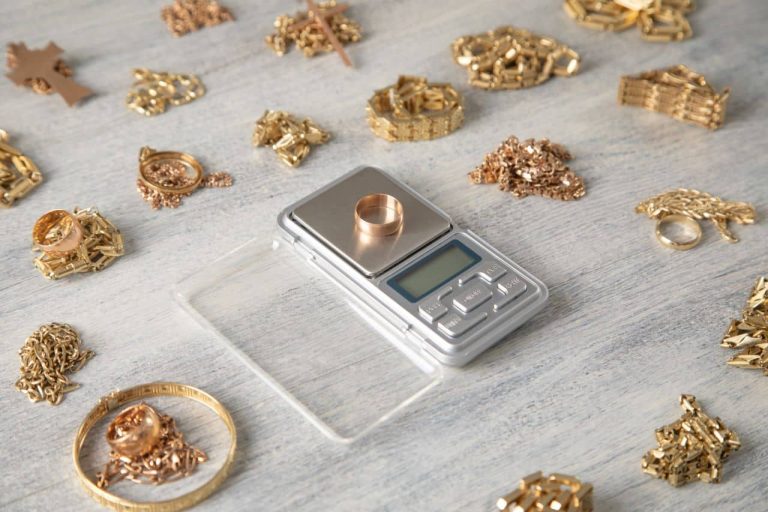
Once you’ve pinned down the karat, the next piece of the puzzle is its weight. Precision really matters here, even a small difference in weight can significantly change the final value. You do not need a fancy lab scale; a simple digital kitchen scale or a small jewelry scale will do the trick perfectly.
For the most accurate results, keep these tips in mind:
- Isolate the Gold: If your jewelry has gemstones or other non gold components, their weight does not count. A gold calculator only cares about the gold, so including the weight of a diamond will throw off your numbers and give you an inflated, inaccurate estimate.
- Use the Right Unit: Grams are the universal currency of gold calculation. Most digital scales measure in grams, so make sure that is what you are using and that you select "grams" in the calculator tool.
- Tare the Scale: Always hit that "zero" button on your scale before placing your item on it. This simple step ensures you’re only measuring the weight of the gold itself.
Step 3: Enter Your Data and Calculate
You are almost there. You now have the two key pieces of information: your gold’s purity (karat) and its weight (in grams). The final step could not be easier. Just pull up a reliable gold calculator and plug those numbers into the right fields.
The calculator instantly does the math we talked about earlier, multiplying your item's pure gold content by the live market spot price. The number you see on the screen is your gold's melt value.
But hold on, what will a buyer actually pay you? The best calculators also let you factor in an estimated payout percentage or refining fee. This gives you a much more realistic expectation of what a cash offer will look like. For instance, if the calculator spits out a melt value of $500, a buyer might offer you 80% of that, which comes out to $400. Factoring this in helps you bridge the gap between the raw value and the actual cash you can expect to walk away with.
By following these three simple steps, identify, weigh, and calculate, you can confidently figure out the baseline value of any scrap gold you own.
Why Market Changes Make a Calculator Essential
The value of your gold isn’t a fixed number you can just look up once and remember. Unlike cash in a savings account, gold is a living, breathing asset whose price can swing dramatically from one day to the next. This constant motion is exactly why a real time price of gold scrap calculator is not just a handy tool, it is an absolute necessity for anyone who wants a fair deal.
Getting your head around this volatility is the first step. The gold market is notoriously sensitive to what’s happening in the world. Things like economic jitters, inflation news, political tensions, and even shifts in currency values can send prices soaring or tumbling. The price your gold commanded last month, or even last week, could be a distant memory today.
The Impact of Market Volatility on Your Scrap Gold
Imagine trying to sell something using a price tag from a year ago. You would almost certainly get it wrong. Selling gold without checking its current market value is no different. The price does not just crawl up or down; it can take massive leaps in very short periods.
This is where a live calculator becomes your best friend. It plugs directly into global market data, making sure the price it uses is accurate down to the minute. If you rely on old information, you could be leaving serious money on the table without even knowing it. By arming yourself with the most current data, you are protected from accepting an outdated or unfair offer. You gain the confidence to know not just what your gold is worth, but also when the best time to act might be.
This simple timeline breaks down the key steps to valuing your gold in today's market, from initial identification right through to the final calculation.
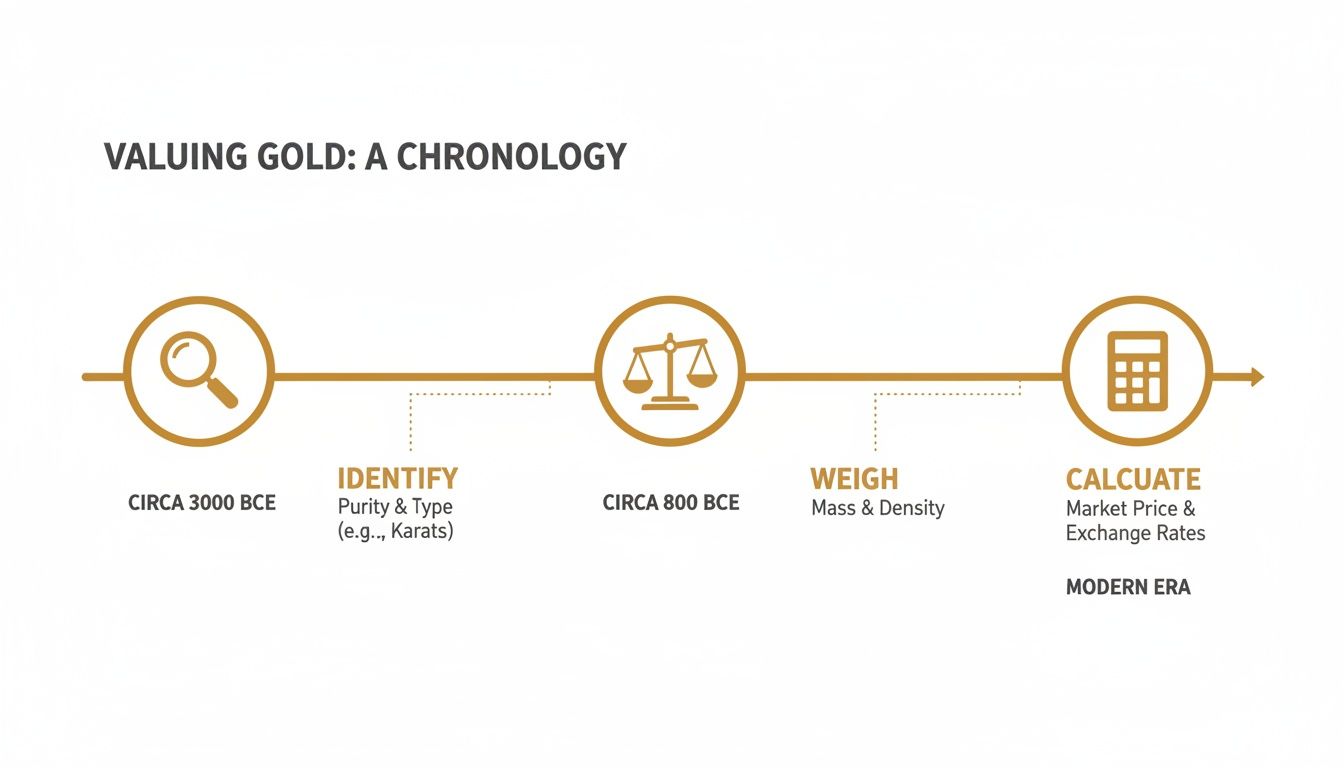
As you can see, that final, precise calculation is the crucial step that modernizes the whole process, turning a guess into a data driven fact.
Gold Prices in Action: A Real World Example
To see just how much prices can change, let's look at a recent market snapshot. Maybe you are holding onto an old family heirloom and wondering what it is truly worth. Tools like TheGoldCalculator.com make it easy to find the melt value of your scrap based on live spot prices, and those prices have seen some jaw dropping moves.
Let's say on January 30, 2026, the spot price of gold hit $5,115.39 per troy ounce. That price did not come out of nowhere. Over the previous month, prices had skyrocketed by 18.42%, the biggest monthly jump since the 1980s. Zoom out even further, and the year over year increase was a massive 82.88%, turning what was once modest scrap into a significant pile of cash. You can dig into these kinds of numbers yourself by checking out historical gold price trends on TradingEconomics.com.
Timing is everything. This table shows how the value of the exact same 15 gram, 18K gold bracelet would change based on these real market fluctuations.
| Date Scenario | Gold Spot Price (Per Troy Ounce) | Estimated Melt Value of Bracelet (11.25g Pure Gold) |
|---|---|---|
| One Year Ago (Approx.) | $2,800 | $1,012.39 |
| Last Month (Approx.) | $4,320 | $1,559.17 |
| Current Price (Jan 30, 2026) | $5,115.39 | $1,846.51 |
The difference is staggering. By tracking the market with a calculator and choosing the right moment to sell, you could have earned hundreds of dollars more for the very same item. This is the power of having real time data at your fingertips. It transforms you from a passive seller into a smart, informed one.
Understanding Melt Value vs. Cash Offer
So, you have punched in your gold’s weight and purity into a price of gold scrap calculator, and now there is a number staring back at you. That figure is the melt value, the raw, real time market worth of the actual gold in your item. It is a powerful number to have, but it is crucial to understand what it really means before you sell.
Think of the melt value as your baseline, not the final check you will receive.
When you take your gold to a buyer, their cash offer will almost always be less than that melt value. This isn’t a scam or a sign you are being ripped off. It simply reflects the real world costs of running their business. A gold buyer has overhead, processing fees, and needs to turn a profit to keep the lights on.
It’s a bit like a farmer selling produce to a grocery store. The store buys the apples at a wholesale price, then sells them to you for more. That markup covers their rent, employee salaries, and refrigeration. Gold buyers work on the exact same principle, and their offer is simply the melt value minus their cost of doing business.
What Goes Into a Buyer’s Offer
That gap between the melt value and the cash offer is not just a random deduction. It is a calculated figure based on several legitimate business expenses the buyer has to cover.
Here’s a look at what they’re factoring in:
- Refining Costs: Your old jewelry or scrap is not ready to be turned into a new product. It has to be sent to a professional refinery, where it is melted down and purified back into .999 fine gold. That industrial process involves transport, labor, and specialized equipment, all things the buyer has to pay for.
- Business Overhead: Running a brick and mortar shop is expensive. This includes rent, high level security systems, insurance to protect their inventory, employee wages, and marketing. These are the day to day costs that get baked into their pricing model.
- Profit Margin: At the end of the day, a gold buyer is a for profit business. A small percentage of the difference is their margin, which allows them to stay in business and continue offering a service to the community.
Because of these very real costs, you should always expect a cash offer to be a percentage of the total melt value. It’s the standard, accepted practice across the entire industry.
Setting Realistic Expectations for Your Payout
A good, reputable buyer will be transparent about their payout rates. You’ll find that most offers land somewhere between 70% and 95% of the melt value you calculated. The final percentage often depends on how much gold you are selling and the individual buyer’s business model.
By knowing your melt value in advance, you transform from a passive seller into an informed negotiator. The calculator’s result is your starting point, empowering you to compare offers from different buyers and confidently choose one that provides a fair and reasonable percentage.
The global scrap market is a massive business. A pawn shop with 100 grams of 18 karat scrap might be looking at a melt value of around $38,360 if the spot price is $5,115 per ounce. But their actual return from the refiner will be less. This is why understanding the percentages is so vital for everyone. The same logic applies when you are selling a luxury watch; you need to compare the item’s market value against its intrinsic metal value to make an informed decision.
The table below gives you a clear picture of how this works, using a simple example for an item with a $1,000 melt value.
| Buyer's Payout Percentage | Calculated Cash Offer | What This Means for You |
|---|---|---|
| 70% | $700 | A common offer, especially for smaller quantities of low karat gold. |
| 85% | $850 | A very fair and competitive offer from a reputable dealer. |
| 95% | $950 | A top tier offer, often reserved for high volume or regular clients. |
Using a price of gold scrap calculator is not about finding a buyer who will pay 100% of the melt value, those do not exist. It is about arming yourself with knowledge so you can spot a fair deal and sell your gold with total confidence.
How to Sell Your Gold Scrap Smartly and Safely
Armed with an accurate valuation from our scrap gold calculator, you are no longer just a seller, you are an informed decision maker. That number gives you power. Now, the next step is turning that knowledge into a clear, actionable plan to get the best possible cash offer for your gold.
This isn’t about finding the first buyer who will take your gold off your hands. It is about finding the right one. A little bit of smart shopping here can make a huge difference in your final payout, ensuring you walk away feeling confident and fairly paid.
Create a Selling Strategy
Here’s the golden rule: never accept the first offer. To get the most for your scrap, you absolutely have to shop around and get multiple quotes. Every buyer has different overhead costs, business models, and profit margins, which means their offers can be wildly different for the exact same items.
Start by making a list of potential buyers to compare. Your list should include a mix of options:
- Local Jewelers: These shops often have deep expertise and may offer competitive rates, especially if you have high quality or unique scrap pieces.
- Reputable Pawn Shops: Pawn shops can be a quick and convenient option, but be aware that their offers can vary dramatically from one shop to the next.
- Online Gold Buyers: These services frequently have lower overhead, which can translate into better payouts. The trade off is that you will need to securely ship your items.
When you contact each buyer, do not be shy. Tell them what you know, the weight, the purity, and the current melt value of your gold. This immediately signals that you have done your homework and are not someone who can be lowballed.
How to Evaluate Gold Buyers
Choosing a trustworthy buyer is just as critical as knowing your gold's value. A fantastic offer means nothing if the buyer is dishonest or uses shady practices. You need to vet their reputation just as carefully as they inspect your gold.
One of the most important things you can do is ask buyers to explain their pricing. A transparent, honest buyer will have no problem telling you what percentage of the spot price they pay and how they arrived at their offer. If they get defensive, evasive, or try to pressure you into a quick decision, consider it a major red flag.
The table below breaks down the key trust signals you should look for when sizing up a potential buyer.
| Trust Signal | Why It Matters |
|---|---|
| Positive Online Reviews | Shows a track record of fair deals and satisfied customers. |
| Transparent Pricing | Reputable buyers openly state their payout percentages. |
| Professional Certifications | Memberships in industry groups signal a commitment to ethical standards. |
| No High Pressure Tactics | You should feel completely comfortable walking away to think about an offer. |
It is also helpful to remember the bigger picture. Gold's historical data shows its incredible growth from just $18.93/oz in 1833 to the highs we see today, highlighting its timeless value. Buyers will typically pay 70% to 95% of this live spot value to cover their refining costs and make a profit. You can explore the data for yourself and see historical gold prices at NMA.org.
By taking these steps, you can navigate the selling process with total confidence. For even more guidance, check out our in depth article on finding the best place to sell gold. The prep work you do now is what guarantees you get the fair price you deserve.
Common Questions About Gold Scrap Calculation
Even with a great tool in your hands, a few practical questions always seem to pop up when you are trying to figure out what your gold is worth. Getting these sorted out is the last step to feeling totally confident in your valuation.
Let's walk through some of the most common hurdles people run into when using a price of gold scrap calculator.
What if My Gold Has No Hallmark or Stamp?
You have searched every nook and cranny of your item and cannot find a karat stamp or fineness mark. Now what? Your best move, without a doubt, is to get it professionally tested.
A reputable jeweler can use a simple acid test or a more advanced electronic tester to nail down its exact purity. It might be tempting to take a guess, but guessing the karat is a surefire way to get a wildly inaccurate value. For any unmarked piece, a professional test is the only truly safe and accurate path forward. Think of a hallmark as the manufacturer's guarantee of purity. Without it, you need an independent verification to make sure the numbers you are plugging into a gold scrap calculator are legit.
Can I Use a Scrap Calculator for Gold Coins or Bars?
Technically, yes, you can calculate the melt value of gold coins and bars. But you would likely be leaving money on the table.
Investment grade items like American Gold Eagles or Canadian Maple Leafs almost always carry a value far beyond their raw metal content. This is known as their bullion value or, for rarer pieces, numismatic value, which includes a premium for their form, mint, and collectibility.
A price of gold scrap calculator is perfect for items where the value is tied only to the metal itself, like:
- Broken or unwanted jewelry
- Dental gold fillings and crowns
- Bits and pieces from manufacturing processes
For investment bullion or collectible coins, you will want to talk to a specialized coin or bullion dealer. They will give you the full picture of what your items are actually worth on the market.
How Accurate Is an Online Price of Gold Scrap Calculator?
The accuracy of any online calculator comes down to two things: the quality of its data and the accuracy of your inputs.
A top tier calculator pulls in real time market data, often refreshing every few minutes, to make sure its spot price is current. That part is on the tool.
The second part of the equation is all you. If you provide the correct karat and an exact weight, the calculator will give you a precise melt value. Just remember, this number is your baseline, the pure, raw value of the metal. The final cash offer you get from a buyer will almost always be a percentage of that result to cover their own costs and profit.
Ready to see what your gold is really worth with a tool built for accuracy and transparency? The Gold Calculator gives you instant, real time valuations based on live market data, so you can sell with total confidence. Use our free tool today.